

Getting Better at Becoming
On self-sabotage, nervous systems, and the peculiar human tendency to survive ourselves

“I was born with an open wound, and colors pouring from it. Don’t call me brave or a martyr; I’m just a woman who learned to love even in the midst of pain. I am a brush, I am a scream, I am broken flesh and a burning spirit. I paint myself because I am the only thing I know with fury, with tenderness. And if anyone doesn’t like it, don’t look at me, because I didn’t come to fit in, I came to be.”
—Frida Kahlo
The Hungry Ghost
There is a particular kind of exhaustion that comes from watching yourself participate in your own diminishment while remaining intelligent enough to narrate it in real time.
Most people know this feeling, though they describe it differently. In Buddhist philosophy, the “hungry ghost” represents a state of perpetual craving: a being with an enormous appetite and no capacity to feel full. Neuroscience frames the same phenomenon less spiritually and more mechanically. The brain, in its efficiency, builds predictive models from repeated experience. Over time, the nervous system stops distinguishing carefully between what is healthy and what is familiar.
Which is how some people spend years returning to circumstances they consciously know are harming them.
Not because they enjoy suffering, necessarily. More often, because the body confuses recognition with safety.
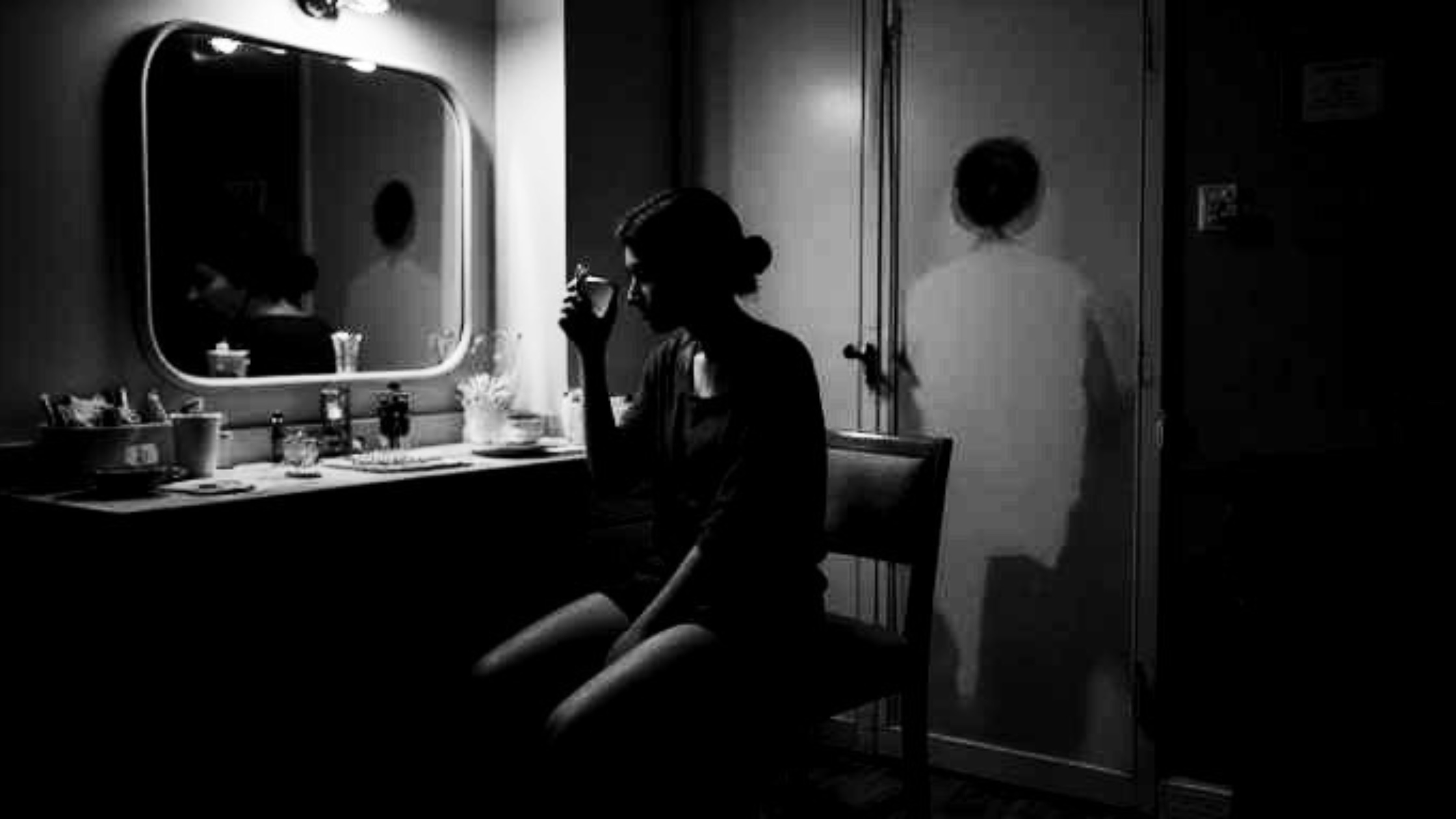
This explains more human behavior than we are generally comfortable admitting. The relationship you return to after swearing it ended for good. The compulsion to ruin periods of stability with impulsive decisions that briefly recreate emotional intensity. The strange suspicion some people feel in the presence of peace, as though calm itself contains hidden danger.
For a long time, I interpreted these cycles morally. Weakness. Lack of discipline. Character defects. It took years to understand that much of what we call self-sabotage is actually the nervous system attempting to preserve continuity. The brain prefers a familiar hell to an unfamiliar heaven with almost embarrassing consistency.
A great deal of adulthood, I’ve come to believe, involves realizing that intelligence offers no immunity from destructive patterning. In some cases it deepens it. Smart people can produce extraordinarily sophisticated explanations for behaviors that are, at their core, little more than rehearsed injury.
I say this as someone who once mistook emotional volatility for aliveness and confusion for chemistry. Somewhere in my twenties, I developed the remarkable ability to interpret destabilization as romance. If a situation felt calm, reciprocal, and emotionally available, my nervous system treated it with the suspicion of a suburban deer hearing a twig snap.
Meanwhile, chaos arrived wearing leather boots and a good story.
The embarrassing thing about recovery is that eventually you must stop describing your life symbolically and admit that your patterns are operational. They produce outcomes. Repeatedly. At scale.
At some point, every person has to confront the possibility that multiple selves are operating within them simultaneously: the self that wants transcendence and the self that wants anesthesia; the self capable of building a meaningful life and the self quietly undermining it from beneath the floorboards.
The disturbing part is how often both voices sound reasonable.
The Counter-Instinct
And yet, alongside this machinery of repetition, another force persists.
Not optimism exactly. Certainly not constant growth. Human transformation is usually far less cinematic than people advertise online. Most meaningful change occurs quietly and without aesthetic coherence. Someone decides to stop lying. Someone leaves a relationship that has reduced them psychologically. Someone goes to therapy long enough to become difficult to manipulate. Someone gets sober and then discovers sobriety does not magically reorganize consciousness into a spa retreat.
Still, people continue trying.
This is the part of humanity I find increasingly difficult to dismiss. Even after catastrophic decisions, humiliations, losses, relapses, public embarrassments, divorces, bankruptcies, overdoses, people continue inching toward coherence with almost irrational persistence.
The nervous system may prefer familiarity, but there appears to be something else in us that prefers expansion. Or perhaps integrity. I’m still not sure of the correct word.
Whatever it is, it survives astonishing conditions.

Over the past several years I’ve become interested in the idea that healing may have less to do with becoming a new person than with reducing internal contradiction. The goal is not perfection. The goal is becoming someone whose actions stop requiring so much explanation.
A simpler life, in other words.
Not simple externally. Some lives never become externally simple. But internally simpler. Less fragmentation between what one believes and what one repeatedly does.
This sounds obvious until you attempt it.
Because the selves that keep us stuck are often charismatic. Destruction can feel seductive. Performance can feel safer than sincerity. Entire identities are built around avoidance strategies that once functioned brilliantly under pressure and then quietly became prisons.
People rarely surrender these adaptations gracefully.
I certainly didn’t.
The Interruption
Ten years ago this summer, I was released from jail after being arrested with my four-month-old son in the car.
I remember less about the actual arrest than the psychic rearrangement that followed it. Certain events divide a life into before and after with such violence that the personality constructed prior to them cannot survive intact. Jail was not spiritually enlightening. It was fluorescent, humiliating, bureaucratic, and deeply clarifying.
When I got out in 2016, I began writing what I believed was simply a fifth step inventory. I wasn’t attempting literature. I had no larger artistic ambition attached to it. The writing began because my life had become impossible to explain through denial alone.
There are moments when a person exhausts their ability to mythologize themselves.
That was one of mine.

So I started documenting everything. Addiction. Modeling. Men. Ego. Homelessness. Obsession. Family systems. Spiritual confusion. Narcissism. Performance. All the strange architectures people build to avoid being fully seen, sometimes even by themselves.
What surprised me was not the content but the patterning beneath it. Once the narrative was laid out chronologically, the repetitions became impossible to ignore. Different cities, different faces, different substances, same nervous system. Same wound attempting to solve itself through increasingly elaborate methods.
The pages accumulated slowly over the next decade. Somewhere during that process, the project changed shape. The material stopped behaving like confession and started behaving more like inquiry.
The central question was no longer What happened to me?
It became:
What are human beings actually fighting when they attempt to change?
The Ballad
The answer, I think, is rarely a single thing.
People imagine transformation as a clean break from the past, but most lives do not unfold that way. Becoming is usually repetitive, uneven, humiliating, nonlinear. You learn a lesson; then you discover the lesson has layers. You outgrow one version of yourself only to meet another hiding behind it.
Which may be why the title that eventually emerged felt accurate.
Not better in the moral sense. Better becoming as process. As motion. As ongoing negotiation between the selves that destroy and the selves that create.
The book releases this summer, exactly ten years after the writing began accidentally on the other side of a jail cell and a fourth step. What started as an attempt to inventory my wreckage became an investigation into consciousness itself: how identity forms, how suffering repeats, how performance distorts reality, how people survive themselves.

It is not a redemption narrative. I distrust those. Human beings are rarely redeemed all at once.
But I do believe people can become more conscious. More integrated. More honest about the forces operating inside them. Sometimes that honesty changes everything.
Which is still a surreal sentence to type considering the original document began as a desperate attempt to understand why I kept setting fire to my own life while insisting I was only trying to stay warm.